


Where and When
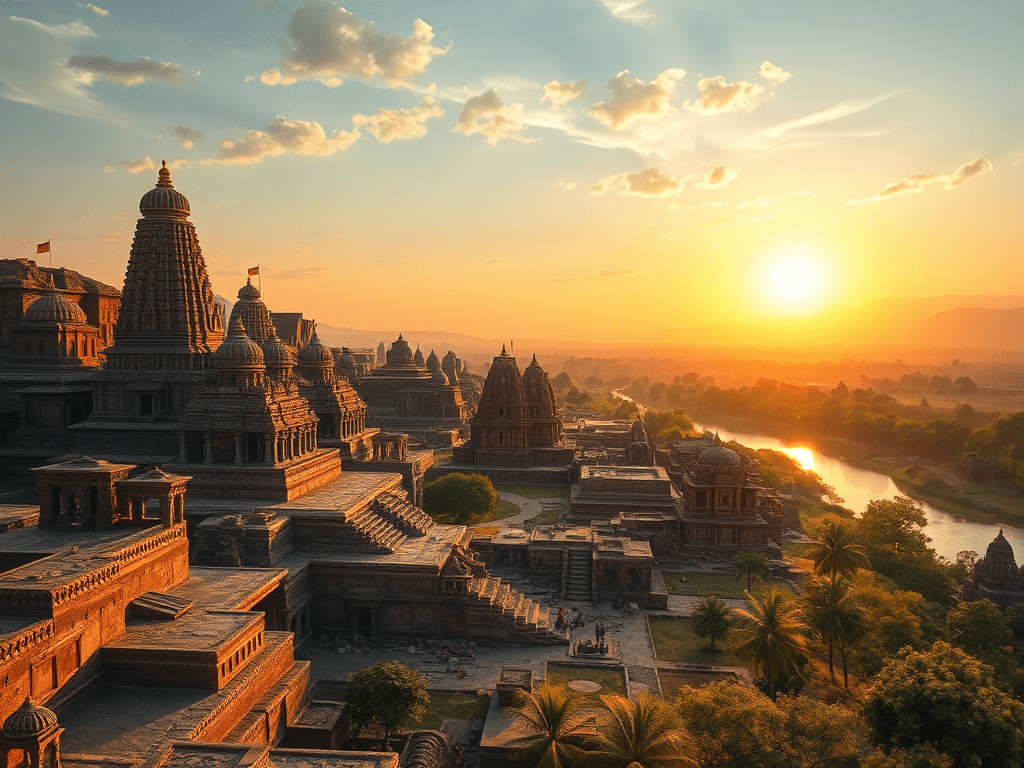
Nestled in the heart of the Deccan Plateau, the Vijayanagara Empire stands as a testament to the resilience and cultural vibrancy of medieval South India. Spanning from 1336 to 1646 CE, this Hindu kingdom rose from the ashes of invasions to become a powerhouse of art, architecture, and administration. Everyone has read about the great Roman empire and the Ottomans. Vijayanagara Empire was probably the richest and most powerful empire in India before the Mughals. If I tell you that they were selling diamonds in open market like groceries at its peak, you can imagine the wealth and prosperity of the empire.
Its capital at Vijayanagara (modern-day Hampi in Karnataka) was once one of the world’s largest and most prosperous cities, rivalling contemporary metropolises like Beijing and Constantinople. In this detailed exploration, we’ll delve into its origins, rulers, societal structure, economic prowess, cultural achievements, and eventual decline, drawing on historical accounts to paint a vivid picture of an empire that safeguarded Hindu traditions amid turbulent times.
Founding and Early History
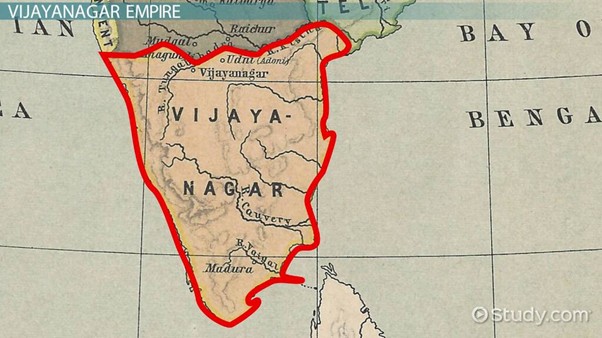
The Vijayanagara Empire was established on April 18, 1336, by brothers Harihara I and Bukka Raya I of the Sangama dynasty, who hailed from the Yadava clan. These founders, possibly of Kannadiga or Telugu origin, had served under the Kampili kingdom before rebelling against the Delhi Sultanate’s Tughluq rule. They were taken prisoners by Mohammed bin Tughlaq at the fall of Kampili to Delhi where they grew up to be all rounded warriors. They were sent back by Tughlaq to rule the southern kingdoms in his name as governors.
Legends attribute their inspiration to the sage Vidyaranya (also known as Madhavacharya) from the Sringeri monastery, who encouraged their reconversion to Hinduism after a brief period under Islamic influence. The empire’s name, meaning “City of Victory,” reflected its strategic location on the banks of the Tungabhadra River, chosen for its natural defences against northern invaders.
In its early years, the empire consolidated power by absorbing remnants of the Hoysala, Kakatiya, and Pandya kingdoms. Harihara I (r. 1336–1356) focused on building fortifications and alliances, while Bukka Raya I (r. 1356–1377) expanded territories southward and westward, including Goa and the Doab region between the Tungabhadra and Krishna rivers.
By the late 14th century, under Harihara II (r. 1377–1404), the empire extended beyond the Krishna River, establishing a bulwark against the Bahmani Sultanate. This period marked the empire’s role as a protector of Hindu dharma, earning rulers’ titles like “Guardian of the Cows and Brahmins.”
Prominent Rulers and Dynasties
The empire was governed by four dynasties over its 310-year span: Sangama (1336–1485), Saluva (1485–1505), Tuluva (1505–1570), and Aravidu (1570–1646). Each brought unique contributions, with power often shifting through usurpations and regencies.
– “Sangama Dynasty”: The founding line included Deva Raya I (r. 1406–1422), who reformed the military by incorporating Muslim archers and importing horses from Arabia, and Deva Raya II (r. 1424–1446), dubbed “Gajabetekara” (Elephant Hunter) for his conquests, including invasions of Sri Lanka and tribute from Burma.
– “Saluva Dynasty”: Saluva Narasimha Deva Raya (r. 1485–1491) overthrew the weakening Sangamas and recovered lost territories from the Bahmanis and Gajapatis of Odisha.
– “Tuluva Dynasty”: This era peaked under Krishna Deva Raya (r. 1509–1529), the empire’s most celebrated ruler. A brilliant strategist, poet, and patron, he annexed the Raichur Doab, defeated the Deccan sultanates at the Battle of Raichur (1520), and expanded to the Godavari River. His court hosted the “Ashtadiggajas” (Eight Elephants), a group of Telugu poets, and he authored the epic *Amuktamalyada*. Successors like Achyuta Deva Raya (r. 1529–1542) and Sadasiva Raya (r. 1542–1570) ruled under the influence of regent Aliya Rama Raya.
– “Aravidu Dynasty”: Rama Raya (de facto ruler 1542–1565) interfered in Deccan politics but met defeat at the Battle of Talikota (1565). Later rulers like Venkata II (r. 1586–1614) shifted capitals to Penukonda and Chandragiri, but the empire fragmented by 1646.
Administration and Economy
The empire’s administration was a centralized monarchy, with the emperor advised by a council of ministers (Pradhana) and a prime minister (Mahapradhana). Provinces (Rajyas) were governed by Dandanayakas, often royal kin, subdivided into districts (Vishayas) and villages managed by hereditary landlords (Gowdas). The capital featured 72 palace departments overseen by female attendants, and records were maintained by scribes using wax seals.
Economically, agriculture thrived on advanced irrigation systems, including tanks, canals, and aqueducts, supporting crops like rice, cotton, sugarcane, and spices. Trade boomed through 300 ports, exporting textiles, jewels, and ivory to China, Persia, and Europe, while importing horses, silk, and metals.
Taxes included land revenues, temple endowments, and protection fees, fuelling a massive military. Under Krishna Deva Raya, the empire’s wealth attracted Portuguese traders, who noted its opulent markets.
Culture, Society, and Religion
Society adhered to the Hindu varna system, with mobility based on occupation (jati). Women held roles in administration and arts, though practices like sati and dowry persisted. Sports, festivals like Mahanavami, and royal attire reflected a blend of indigenous and Indo-Islamic influences.
Religion centred on Hinduism, with emperors as protectors of dharma, patronizing Shaivism (Virupaksha at Hampi) and Vaishnavism (Venkateshwara at Tirupati). The Bhakti movement flourished through Haridasas like Purandara Dasa, father of Carnatic music. Tolerance extended to Jains, Muslims (who served in the army), and early Christians via Portuguese contacts.
Literature blossomed in multiple languages: Sanskrit commentaries by Sayana, Kannada epics like ‘Gadugina Bharata’, Telugu masterpieces by the Ashtadiggajas, and Tamil devotional hymns. The Kerala school of mathematics advanced under scholars like Madhava.
Architecture and Art
Vijayanagara architecture fused Chalukya, Hoysala, Pandya, and Chola styles with Islamic elements like arches and domes, using durable granite. Signature features included ornate pillared halls (kalyanamantapas), towering gateways (rayagopuras), and monolithic sculptures.
Iconic sites include the Vitthala Temple with its musical pillars, Virupaksha Temple, Hazara Rama Temple, and the stone chariot at Hampi—a UNESCO World Heritage Site since 1986. Secular structures featured forts with seven layers of walls, bazaars, and water tanks.
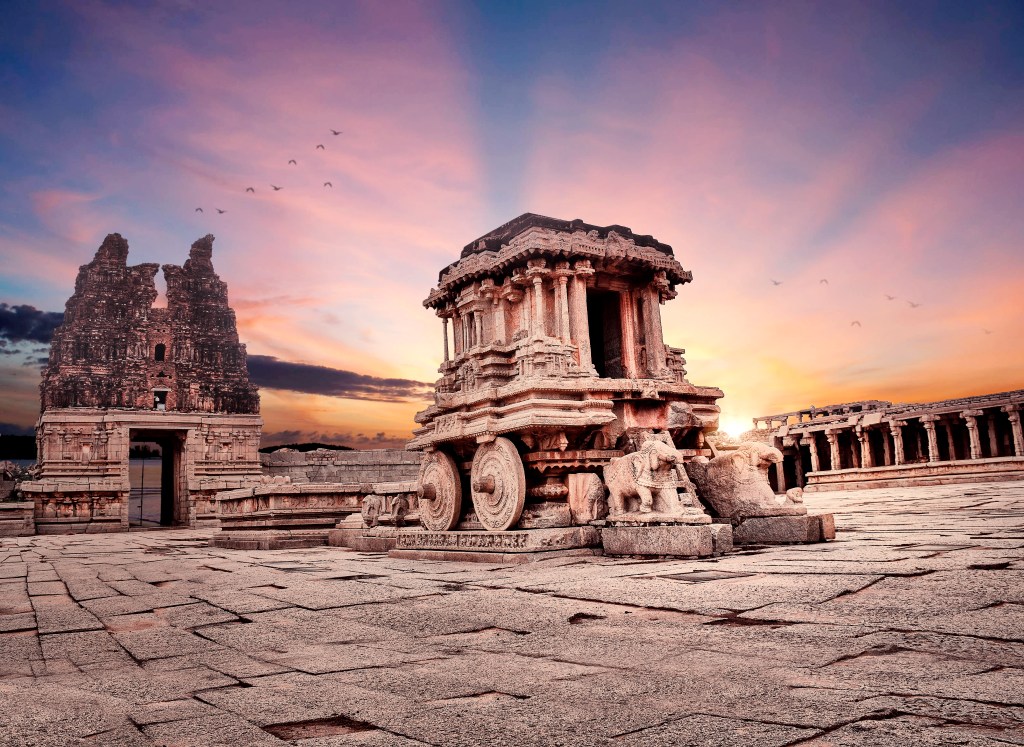
Majesty of Hampi today
Decline and Fall
The empire’s decline began after Krishna Deva Raya’s death in 1529, exacerbated by internal succession disputes and weak rulers.
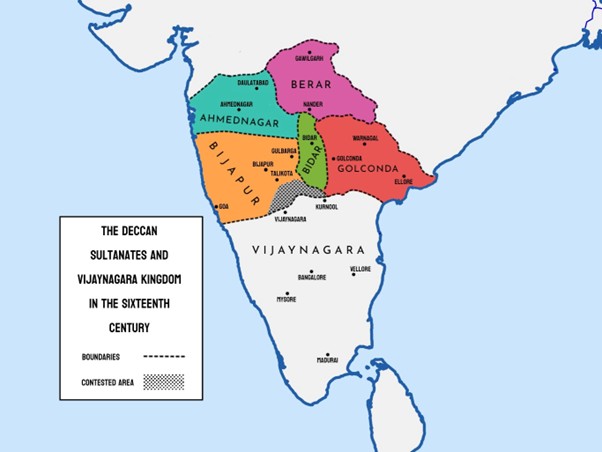
The catastrophic Battle of Talikota in 1565 saw a coalition of Deccan sultanates (Bijapur, Ahmadnagar, Golconda) defeat Rama Raya’s forces, leading to the sack and abandonment of Vijayanagara. Technological lags in artillery and defections contributed to the loss. The Aravidu dynasty lingered in fragmented territories until 1646, giving way to successor states like the Nayaks of Madurai and the Kingdom of Mysore.
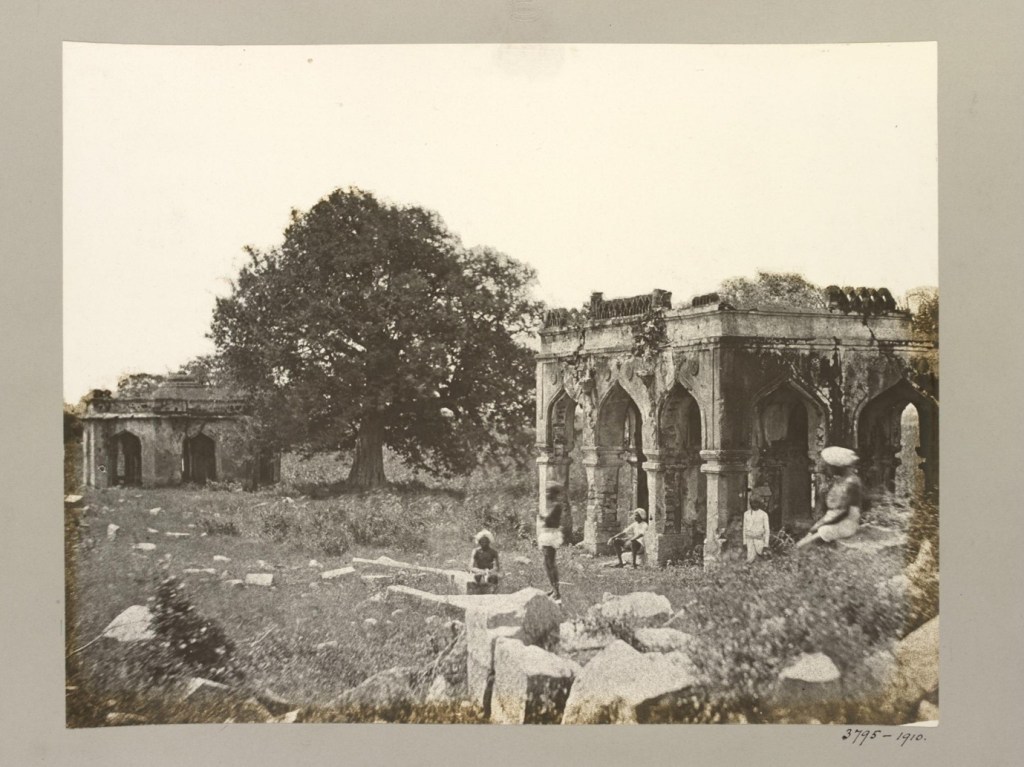
The ruins of Hampi before restoration
Legacy
The Vijayanagara Empire’s enduring legacy lies in its preservation of Hindu culture against invasions, fostering a renaissance in arts, literature, and irrigation technology. Its monuments at Hampi continue to inspire, symbolizing a golden age of South Indian history. By blending diverse influences, it laid the foundation for modern regional identities in Karnataka, Andhra Pradesh, and Tamil Nadu.
Whether you’re a history buff or a traveller, the ruins of Vijayanagara whisper tales of grandeur—plan a visit to Hampi to experience this epic saga firsthand!
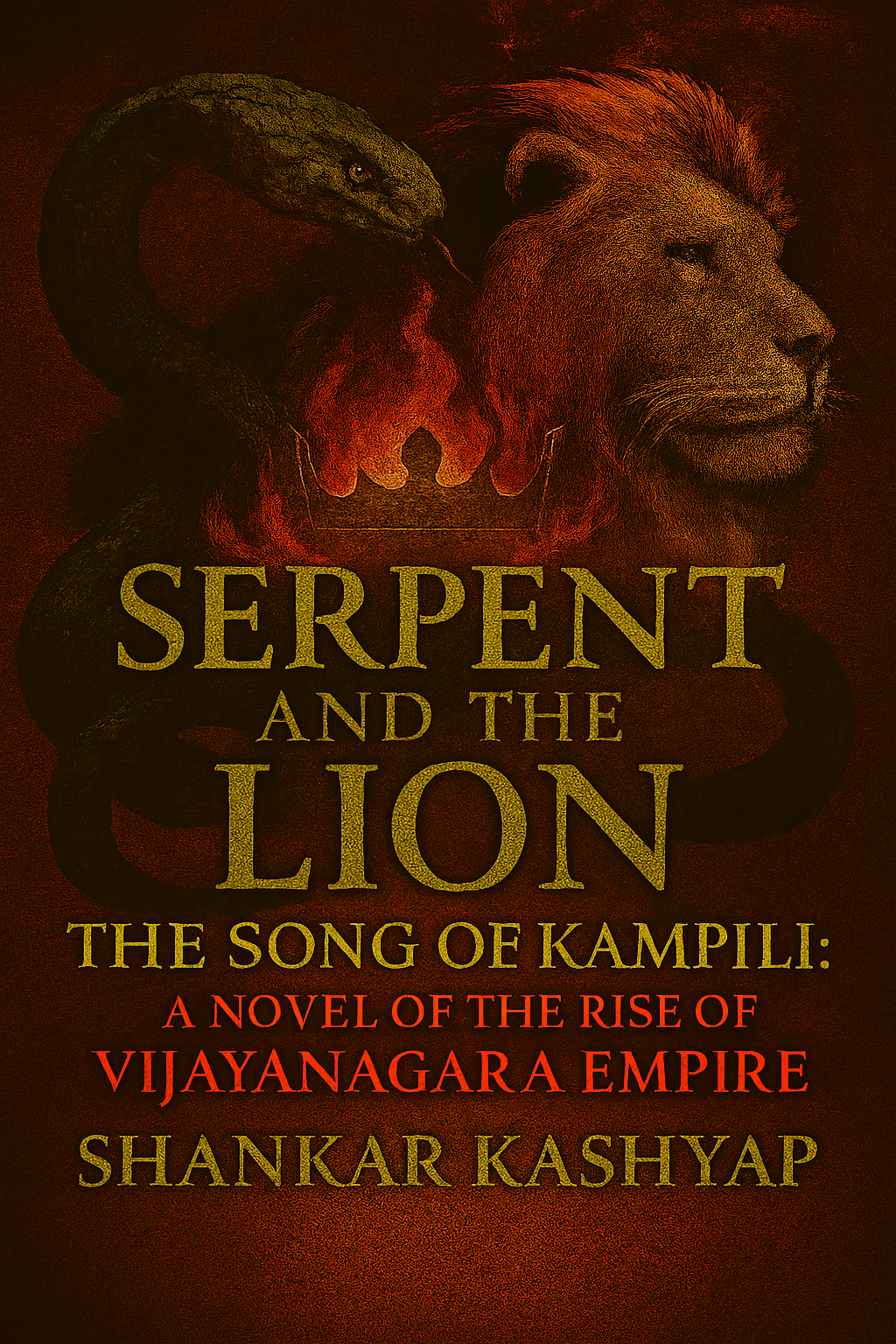
If you want to learn more about this fascinating empire which was probably as big as Rome was in its heyday and as powerful, read the first of the five book series – Serpent and the Lion; Song of Kampili.
The Serpent and the Lion: The Song of Kampili: 1 (Chronicle of Vijayanagar Empire) : KASHYAP, Dr SHANKAR: Amazon.co.uk: Bookshttps://www.amazon.co.uk/Serpent-Lion-Kampili-Chronicle-Vijayanagar/dp/B0GJ3WWW3X/ref=sr_1_1?crid=25XKJZ1CLXR35&dib=eyJ2IjoiMSJ9.9LHSwQ30aW1wrWQtAJnT6ThvTRx9ELfA0sfesgA4E63A8HzAkbWsv9TToob_oN8jslizoE6I8zlczAd-ke1Itw.V80kW4NII3R8HXHq_SV3Js2qd-ZXTqyWw5-Z8z2IVeA&dib_tag=se&keywords=serpent+and+the+lion&qid=1772725457&sprefix=serpent+and+the+lion%2Caps%2C247&sr=8-1
 shankar kashyap
Leave a comment